
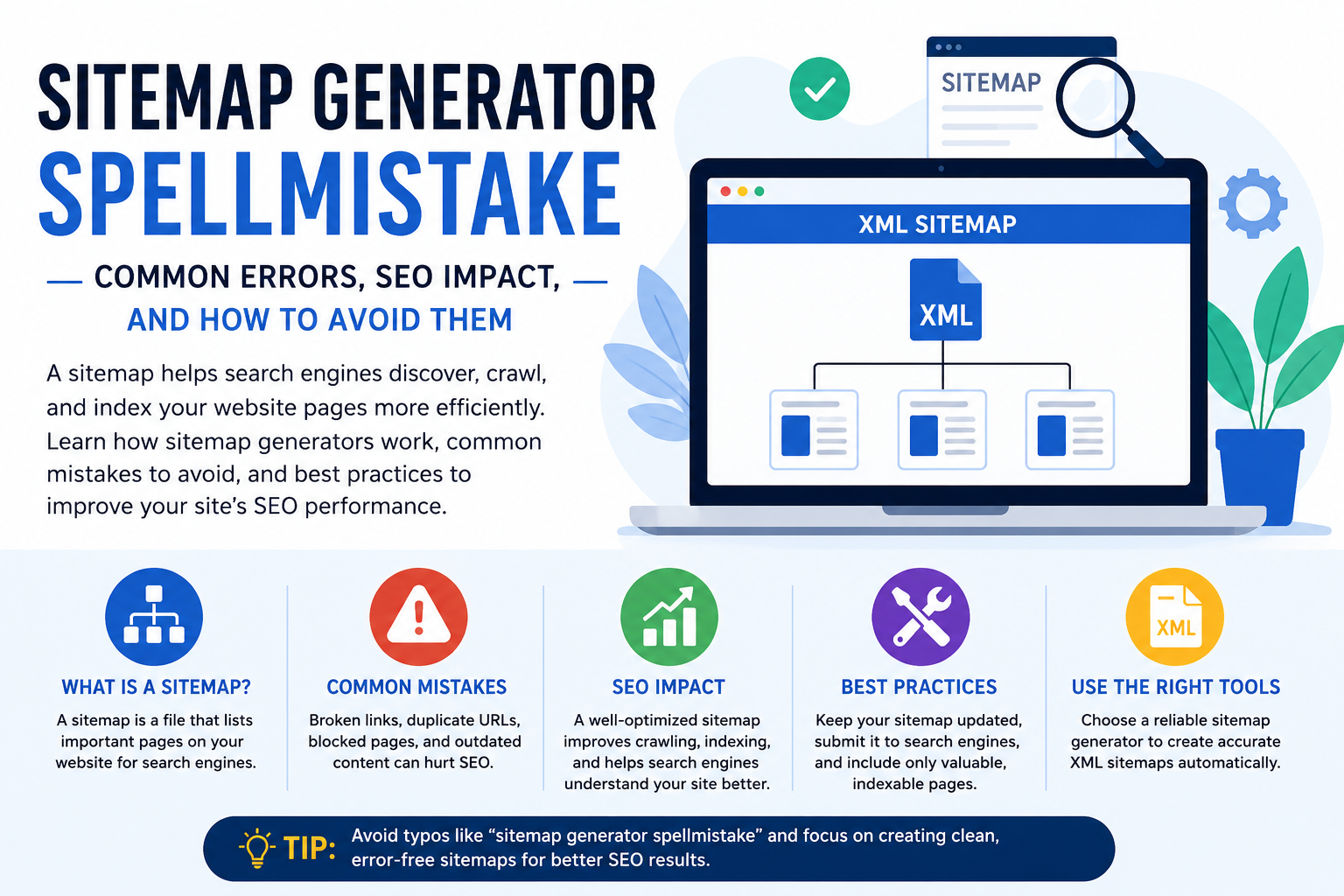
Search engines rely on structured information to discover, crawl, and index websites efficiently. One of the most important files that helps this process is a sitemap. Whether you manage a personal blog, an eCommerce store, or a corporate website, creating an accurate sitemap is a fundamental part of technical SEO.
Many people searching online accidentally type sitemap generator spellmistake instead of the correct phrase. These typing errors are surprisingly common, especially when users are in a hurry or unfamiliar with technical SEO terminology. While a spelling mistake may seem insignificant, it often reflects a larger need for understanding what sitemap generators do and why they matter.
This guide explains sitemap generators in detail, explores common spelling errors, discusses their SEO implications, and provides practical advice for creating and maintaining high-quality XML sitemaps.
Understanding What a Sitemap Generator Does
A sitemap generator is a tool that automatically creates a structured list of pages on a website. This list is typically saved as an XML file that search engines like Google and Bing use to understand a site’s content.
Without a sitemap, search engines can still discover pages through internal links. However, a sitemap makes the crawling process faster and more reliable, especially for websites with hundreds or thousands of pages.
Modern sitemap generators scan your website, collect URLs, identify important pages, record modification dates, and organize everything according to search engine guidelines.
Many content management systems, including WordPress, generate sitemaps automatically through SEO plugins or built-in features, reducing the need for manual updates.
Why People Search Using Incorrect Spellings
Typing mistakes happen every day. Technical words often contain unfamiliar combinations of letters, making them easy to misspell.
Someone searching for sitemap generator spellmistake may actually be looking for information about XML sitemap tools, troubleshooting sitemap errors, or trying to find the correct spelling of “generator.”
Search engines have become increasingly intelligent. Instead of matching only exact words, they analyze user intent, previous searches, and language patterns to display the most relevant results.
This means users often receive helpful information even when their search contains spelling mistakes.
Common Sitemap-Related Misspellings
There are many variations people accidentally type while searching for sitemap tools.
Some users write “site map generator” with a space. Others type “sitmap generator,” “sitemp generator,” or confuse “generator” with “genrator” or “genarator.”
In other cases, people mix XML terminology with HTML sitemap concepts, creating searches that combine several unrelated terms.
These mistakes rarely prevent users from finding useful information because modern search engines apply spell correction and semantic understanding before displaying results.
XML Sitemap vs HTML Sitemap Sitemap Generator Spellmistake
Although both serve navigation purposes, XML and HTML sitemaps have different audiences.
An XML sitemap is designed primarily for search engine crawlers. It provides structured information about website URLs, update frequency, priority, and other metadata.
An HTML sitemap, on the other hand, is created for visitors. It acts as a navigational page that helps users browse important sections of a website more easily.
Many successful websites use both types because they improve usability while supporting better search engine discovery.
Why Sitemaps Matter for SEO Sitemap Generator Spellmistake
Search engine optimization is much more than keywords and backlinks. Technical SEO forms the foundation that allows search engines to understand website structure.
A well-maintained sitemap helps search engines identify new pages quickly.
It also assists with indexing updated content, especially when articles, product pages, or landing pages change frequently.
Large websites with thousands of URLs benefit significantly because crawlers receive a clear roadmap instead of relying solely on internal linking.
Although a sitemap does not guarantee higher rankings, it improves crawl efficiency, which supports overall SEO performance.
How Search Engines Process Sitemaps Generator Spellmistake
When a sitemap is submitted through webmaster tools, search engines periodically download and analyze it.
The crawler compares listed URLs with previously indexed content.
New pages may be added to the crawl queue, while removed pages can eventually disappear from search results if they no longer exist.
Search engines also evaluate canonical tags, redirects, robots.txt directives, structured data, page quality, and internal linking before deciding whether to index individual pages.
This explains why simply submitting a sitemap does not guarantee every page will appear in search results.
Features of a Good Sitemap Generator
Not every sitemap tool offers the same functionality.
A reliable generator should automatically detect new pages, exclude duplicate URLs, respect canonical settings, and produce valid XML formatting.
The best tools also support image sitemaps, video sitemaps, multilingual websites, and large websites split into multiple sitemap files.
Automatic updates are particularly valuable because they reduce maintenance and ensure search engines always receive fresh information.
Integration with popular CMS platforms makes sitemap management even easier for beginners.
Common Sitemap Errors Website Owners Make Sitemap Generator Spellmistake
While many people focus on spelling mistakes in search queries, technical mistakes inside the sitemap itself are much more serious.
A common issue is including broken URLs that return 404 errors.
Some websites accidentally include redirected pages instead of their final destination URLs.
Others forget to remove deleted content, resulting in outdated sitemap entries.
Duplicate URLs, incorrect canonical references, blocked pages, and inconsistent HTTPS versions also reduce sitemap quality.
Regular auditing helps identify these problems before they affect search engine crawling.
Can a Typing Error Affect SEO? Sitemap Generator Spellmistake
A common concern is whether searching for sitemap generator spellmistake somehow affects a website’s SEO.
The answer is generally no.
Search queries entered by users do not directly influence a website’s technical performance.
However, using incorrect terminology during website configuration can create confusion.
For example, someone misunderstanding sitemap documentation might generate incomplete XML files or submit the wrong sitemap location inside search engine webmaster platforms.
Learning the correct terminology makes technical SEO tasks much easier and reduces configuration errors.
Best Practices for Creating XML Sitemaps
Creating an effective sitemap begins with understanding your website structure.
Only include indexable pages that provide genuine value to visitors.
Avoid listing duplicate content, filtered search pages, temporary URLs, or pages blocked by robots directives.
Update the sitemap whenever important content changes.
Monitor crawl reports regularly to identify indexing issues.
Keep file formatting valid according to XML standards and ensure the sitemap remains accessible to search engine crawlers at all times.
A properly maintained sitemap becomes a reliable communication tool between your website and search engines, improving crawl efficiency without requiring constant manual work.
Popular Sitemap Generator Tools Sitemap Generator Spellmistake
Website owners have access to many reliable sitemap generation solutions. Some are built directly into content management systems, while others work as standalone applications or cloud-based services.
WordPress users often rely on SEO plugins that automatically generate XML sitemaps whenever new content is published. Website builders also include sitemap functionality as part of their hosting platforms, making the process almost effortless.
For custom-built websites, developers may use dedicated sitemap software or write scripts that automatically create XML files based on the site’s database. Larger organizations sometimes integrate sitemap generation into their deployment workflow so the sitemap is refreshed every time new content goes live.
Regardless of the tool used, the most important factor is accuracy. An automatically generated sitemap is only useful if it reflects the current state of the website.
How to Verify That Your Sitemap Is Working Sitemap Generator Spellmistake
After creating a sitemap, verification is an essential next step.
Open the XML sitemap in a browser to ensure it loads correctly. The file should display structured XML content without formatting or server errors.
Next, submit the sitemap through your preferred search engine webmaster dashboard. Once submitted, monitor indexing reports over the following days and weeks. These reports reveal whether search engines encountered errors while reading the file.
It’s also helpful to compare the number of indexed pages with the number of URLs listed in the sitemap. A significant difference may indicate crawl issues, duplicate content, or low-value pages that search engines have chosen not to index.
Routine checks help identify problems before they become larger technical SEO issues.
The Relationship Between Robots.txt and Sitemaps
A sitemap and a robots.txt file serve different purposes, but they work together.
The robots.txt file tells search engine crawlers which sections of a website should or should not be accessed. A sitemap, on the other hand, provides a list of URLs that are available for crawling.
These files should not conflict with each other. If a page appears in the sitemap but is blocked in robots.txt, search engines receive mixed signals. This inconsistency can slow down crawling and create confusion.
Maintaining consistency between these technical files improves crawl efficiency and creates a healthier website architecture.
Why Large Websites Need Better Sitemap Management
A small personal website with twenty pages may only need a single XML sitemap.
Large websites are very different. News publications, online marketplaces, educational portals, and eCommerce stores often contain tens of thousands of URLs.
Search engines place limits on the number of URLs and file size within a single sitemap. Because of this, larger websites usually create multiple sitemap files connected through a sitemap index.
This organized structure allows crawlers to process information more efficiently while making maintenance significantly easier.
Automated systems become especially valuable as websites continue to grow.
Mobile SEO and Sitemap Optimization Sitemap Generator Spellmistake
Today, most internet users browse websites from smartphones and tablets.
Although a sitemap itself does not directly influence mobile rankings, it helps search engines discover mobile-friendly content more quickly.
Fast-loading pages, responsive design, optimized images, and clear internal navigation all complement an effective sitemap strategy.
As search engines increasingly evaluate user experience, maintaining strong technical SEO alongside quality content has become more important than ever.
Does Every Website Need a Sitemap?
The answer depends on the size and complexity of the website.
Very small websites with excellent internal linking may not strictly require one because search engines can usually discover every page naturally.
However, most SEO professionals still recommend creating a sitemap because it provides an additional layer of guidance for search engine crawlers.
Websites containing frequently updated articles, product catalogs, videos, images, or multilingual content benefit the most.
Since creating a sitemap requires little effort with modern tools, there are few disadvantages to maintaining one.
Future Trends in Sitemap Technology
Search engine technology continues to evolve rapidly.
Artificial intelligence now helps search engines understand website structure far beyond simple URL discovery. Even so, XML sitemaps remain an important technical standard.
Future sitemap generators are expected to become more intelligent by detecting duplicate content automatically, identifying crawl waste, monitoring orphan pages, and suggesting improvements before indexing problems occur.
Automation will continue reducing manual technical work while improving website health.
As websites become increasingly dynamic, sitemap generation tools will likely integrate even more closely with content management systems, cloud hosting platforms, and analytics software.
Final Thoughts
Many people searching for sitemap generator spellmistake simply want to find the correct tool or understand why their search contains a typo. Fortunately, modern search engines recognize user intent and usually deliver accurate results despite minor spelling errors.
More importantly, understanding how sitemaps function can significantly improve a website’s technical SEO. A well-organized XML sitemap helps search engines discover valuable content, supports efficient crawling, and simplifies website maintenance.
Rather than focusing solely on terminology, website owners should prioritize creating accurate, updated, and error-free sitemaps. Combined with strong internal linking, quality content, fast page speed, and responsive design, a reliable sitemap contributes to a healthier website that is easier for both users and search engines to navigate.
Technical SEO is often built on small details, and the sitemap is one of those details that consistently delivers long-term value. Whether you operate a personal blog or manage a large business website, investing a little time in proper sitemap management can produce lasting benefits.
Frequently Asked Questions
What is a sitemap generator?
A sitemap generator is a tool that automatically creates an XML file containing the important pages of a website. This file helps search engines discover and crawl content more efficiently.
Why do people search for sitemap generator spellmistake?
Many users accidentally misspell technical SEO terms while searching online. Search engines usually recognize the intended meaning and provide relevant results despite the typo.
Does a sitemap improve Google rankings?
A sitemap does not directly increase rankings. Instead, it improves crawling and indexing, which supports overall technical SEO and helps search engines find new or updated pages faster.
How often should a sitemap be updated?
Ideally, the sitemap should update automatically whenever new pages are published, existing pages change significantly, or outdated content is removed.
Can a website have multiple sitemaps?
Yes. Large websites often use several XML sitemap files connected through a sitemap index to stay within search engine size limits.
Should I include every page in my sitemap?
No. Only valuable, indexable pages should be included. Duplicate pages, blocked URLs, temporary pages, and low-quality content should generally be excluded.
What is the difference between an XML sitemap and an HTML sitemap?
An XML sitemap is designed for search engines, while an HTML sitemap helps human visitors navigate a website more easily.
Is an XML sitemap necessary for a small website?
