
Introduction
Website speed has become one of the most important factors in modern digital marketing. Whether you run a blog, an eCommerce store, or a business website, performance directly impacts user experience and search engine rankings. One of the most effective ways to evaluate website performance is by analyzing page size.
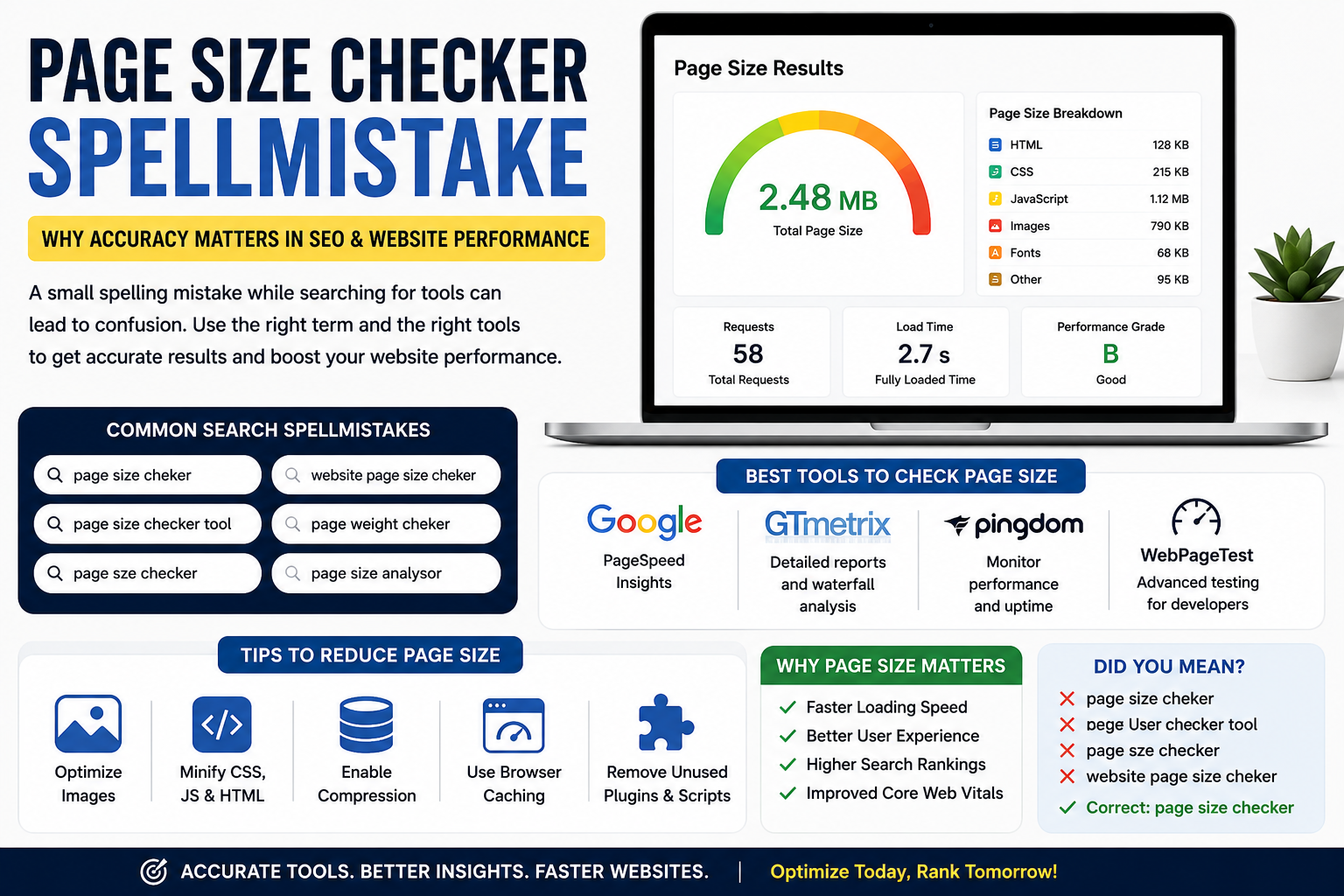
However, many users searching for optimization tools make a page size checker spellmistake, which can sometimes lead to confusion when looking for reliable resources. While search engines are increasingly intelligent, understanding the correct terminology remains essential for efficient SEO research and website optimization.
This article explores the meaning of a page size checker spellmistake, why page size matters, how website owners can avoid common mistakes, and the best strategies for improving website performance.
If you’re interested in discovering trusted publishing platforms, you can also read our detailed Upload Article Reviews to compare popular article submission websites before choosing one.
What Does a Page Size Checker Do?
A page size checker measures the total amount of data downloaded when a visitor opens a webpage. This includes every resource required to display the page properly.
Most page size analysis tools calculate the combined size of HTML documents, images, style sheets, JavaScript files, fonts, videos, icons, and other external resources. Some advanced tools also separate each resource so users can identify which files consume the most bandwidth.
For example, a webpage containing several high-resolution images, multiple tracking scripts, embedded videos, and custom fonts will naturally have a larger page size than a simple blog post containing text and a few optimized images.
Monitoring page size allows website owners to recognize unnecessary files, remove excessive scripts, compress images, and improve loading speed.
Why People Search for “Page Size Checker Spellmistake”
The phrase Page Size Checker Spellmistake usually appears because users accidentally type an incorrect search query while looking for a page size analysis tool.
Search engines have become much better at understanding user intent. Modern algorithms often recognize spelling errors and display results for the intended phrase rather than the exact words entered.
Several factors contribute to these typing mistakes. Users may type quickly, rely on autocorrect, use mobile keyboards, or simply be unfamiliar with technical terminology. Fortunately, search engines can usually interpret these errors correctly, helping users reach the information they actually need.
This behavior is common across many SEO-related searches. Similar mistakes occur when people search for terms like website speed checker, page weight analyzer, cache validator, or image compression tools.
Why Website Page Size Matters
Website speed has become one of the most important aspects of modern web development. Although many factors influence loading speed, page size remains one of the largest contributors.
Every additional file increases the amount of information a browser must download before displaying the page. Larger files require more bandwidth and additional processing time.
Visitors generally expect websites to load within a few seconds. If pages take too long, users often leave before the content even appears. This behavior increases bounce rates and decreases engagement.
Fast-loading pages also contribute to better user satisfaction. Whether someone is shopping online, reading a blog, completing a form, or watching a tutorial, they expect smooth performance across desktop and mobile devices.
For businesses, improved loading speed often translates into higher conversions, better customer retention, and stronger brand credibility.
Understanding Page Size Checker Spellmistake in SEO
A page size checker spellmistake occurs when users enter an incorrect spelling while searching for page size analysis tools or website performance resources.
Examples may include:
- Page size cheker
- Page size chekar
- Page sze checker
- Website size cheker
- Page size analysor
Although these errors seem minor, they highlight the importance of accurate search behavior when conducting technical SEO research.
Search engines often correct spelling mistakes automatically, but using proper terminology helps users access the most relevant information more quickly.
Why Website Page Size Matters
Before discussing the impact of a page size checker spellmistake, it is important to understand why page size is a critical website metric.
Page size refers to the total amount of data that a webpage requires to load completely.
This includes:
- HTML code
- Images
- CSS files
- JavaScript files
- Fonts
- Videos
- External resources
The larger the page size, the longer the page may take to load.
User Experience Benefits
Fast-loading websites provide:
- Better visitor satisfaction
- Lower bounce rates
- Higher engagement
- Improved conversions
Visitors often leave websites that take too long to load.
SEO Advantages
According to Search engine optimization (SEO) best practices, search engines reward websites that deliver strong user experiences.
Optimized page size contributes to:
- Faster page speed
- Better Core Web Vitals
- Enhanced mobile usability
- Improved crawl efficiency
These factors support stronger search engine visibility.
Choosing reliable article publishing platforms can strengthen your SEO strategy while helping you build quality backlinks and improve online visibility.
Common Reasons People Make a Page Size Checker Spellmistake
Many internet users accidentally enter a page size checker spellmistake when searching for performance tools.
Typographical Errors
Simple typing mistakes are the most common cause.
Examples include:
- Missing characters
- Incorrect letter placement
- Duplicate letters
These errors happen frequently during quick searches.
Mobile Device Usage
Typing on smartphones increases the likelihood of spelling mistakes.
Small keyboards and autocorrect features sometimes produce unintended search queries.
Lack of Technical Familiarity
New website owners may not be familiar with technical SEO terminology.
As a result, they often search using approximate phrases rather than industry-standard terms.
Language Barriers
Users whose first language is not English may spell technical terms differently.
Search engines usually interpret intent, but accuracy still improves efficiency.
How Search Engines Handle Page Size Checker Spellmistake Queries
Modern search engines are designed to understand user intent.
When a page size checker spellmistake is detected, search engines often provide corrected results automatically.
Automatic Corrections
Google frequently displays:
“Did you mean…”
This feature helps users quickly reach the correct resources.
Contextual Understanding
Advanced algorithms evaluate:
- Search history
- User intent
- Related searches
- Semantic meaning
This allows search engines to provide relevant results despite spelling errors.
Machine Learning Improvements
Artificial intelligence helps search engines continuously improve query interpretation.
As a result, spelling mistakes are less problematic today than they were years ago.
Best Tools for Measuring Page Size
Avoiding a page size checker spellmistake is only part of the process. Website owners must also choose reliable analysis tools.
Google PageSpeed Insights
Google’s free tool provides:
- Page size insights
- Performance scores
- Core Web Vitals data
- Optimization suggestions
GTmetrix
GTmetrix is widely used by SEO professionals.
Features include:
- Page weight analysis
- Waterfall reports
- Performance monitoring
- Speed recommendations
Pingdom
Pingdom offers simple and user-friendly performance testing.
It helps identify:
- Large files
- Slow-loading resources
- Bottlenecks
WebPageTest
Developers often use WebPageTest for advanced diagnostics and detailed performance reports.
The Relationship Between Page Size and Website Speed
A page size checker spellmistake may prevent users from finding tools quickly, but the larger concern is understanding page size itself.
Large pages often cause:
- Increased load times
- Higher server demands
- Reduced user satisfaction
Images and Media Files
Images are frequently responsible for the majority of page weight.
Unoptimized images can significantly increase loading times.
Excessive JavaScript
Modern websites often rely on JavaScript for functionality.
However, unnecessary scripts can dramatically increase page size.
Third-Party Integrations
Advertising networks, analytics tools, and widgets may add extra resources that affect performance.
Regular audits help identify these issues.
Practical Strategies to Reduce Page Size
Website owners should actively manage page size to maintain strong performance.
Compress Images
Use modern image formats such as:
- WebP
- AVIF
Compression reduces file sizes without noticeable quality loss.
Minify Code
Minifying CSS, JavaScript, and HTML removes unnecessary characters and reduces overall page weight.
Enable Compression
Server-side compression technologies like GZIP and Brotli improve loading efficiency.
Reduce Plugins
Each plugin can introduce additional resources.
Removing unused plugins helps maintain lean websites.
Optimize Fonts
Limiting font families and font weights reduces resource requests.
How Professionals Avoid Page Size Analysis Errors
Experienced SEO specialists rarely encounter problems caused by a page size checker spellmistake because they follow established workflows.
Use Trusted Resources
Professionals typically bookmark trusted performance tools rather than searching repeatedly.
Follow SEO Documentation
Documented procedures reduce errors and improve consistency.
Conduct Regular Audits
Routine website audits identify performance problems before they affect rankings.
Monitor Core Web Vitals
Google’s Core Web Vitals provide valuable insights into real-world user experience.
Tracking these metrics supports ongoing optimization.
Future Trends in Website Performance Optimization
The importance of page speed will continue growing as user expectations increase.
Emerging trends include:
- AI-powered performance optimization
- Automated image compression
- Improved browser caching
- Faster content delivery networks
- Enhanced Core Web Vitals monitoring
Businesses that prioritize performance today will be better positioned for future search engine updates.
Before selecting any publishing platform, it’s worth reading our comprehensive review of article submission websites to find the best option for your content marketing goals.
Conclusion
A page size checker spellmistake may appear insignificant, but it highlights the broader importance of accuracy in SEO and website optimization. While search engines are capable of correcting many spelling errors automatically, understanding the correct terminology improves efficiency and helps users access valuable resources more quickly.
Page size remains a fundamental component of website performance. By using trusted analysis tools, optimizing images and code, and conducting regular audits, website owners can create faster websites that deliver better user experiences and stronger search engine rankings.
FAQ Section
What is a page size checker?
A page size checker is a tool that measures the total size of a webpage and its resources.
Why is page size important?
Page size directly affects website speed, user experience, and SEO performance.
Can spelling mistakes affect tool searches?
Yes, but modern search engines often correct spelling errors automatically.
Which tool is best for checking page size?
Google PageSpeed Insights, GTmetrix, Pingdom, and WebPageTest are among the most popular options.
How often should page size be monitored?
Website owners should review page size regularly, especially after major updates or content additions.
