
Online publishing has changed the way people share ideas, promote businesses, and build authority. Whether you are a blogger, digital marketer, freelancer, business owner, or SEO professional, article submission platforms can help distribute your content to a broader audience. However, not every platform delivers the same quality, results, or user experience.
This is where Upload Article Reviews become valuable. Reading detailed opinions from real users helps you understand whether a platform is trustworthy, effective, and worth your time before creating an account or submitting content.
This guide explores how article publishing websites work, what reviewers usually discuss, the strengths and weaknesses of these services, and how to evaluate reviews objectively. By the end, you’ll have a clear understanding of what to look for before choosing any article-sharing platform.
Why Article Submission Platforms Still Matter
Despite the rapid growth of social media, newsletters, and video marketing, article publishing websites continue to play an important role in digital marketing.
Businesses often use these platforms to increase online visibility, share industry knowledge, introduce products, and improve brand awareness. Writers use them to showcase expertise, while marketers may leverage them as part of broader content distribution strategies.
Although search engine algorithms have evolved significantly over the years, high-quality content published on reputable websites still contributes to a strong online presence.
Instead of focusing solely on backlinks, modern marketers prioritize audience engagement, credibility, and educational value.
Understanding Upload Article Reviews
When people search for Upload Article Reviews, they usually want honest opinions about article publishing platforms rather than promotional descriptions.
These reviews often include firsthand experiences related to:
- Registration process
- Content approval time
- Editorial quality
- Publishing guidelines
- User interface
- Content visibility
- Customer support
- SEO benefits
- Spam policies
- Overall satisfaction
Good reviews explain both positive and negative experiences instead of presenting only one side of the story.
Why People Read Reviews Before Publishing
Publishing an article requires effort.
Researching, writing, editing, formatting, and optimizing content can take several hours or even days. Nobody wants that work rejected without explanation or published on a low-quality website that receives little traffic.
Reviews reduce uncertainty by helping users understand what to expect.
They also reveal whether a platform is actively maintained, whether editors respond quickly, and whether published articles receive meaningful exposure.
This information allows writers to make informed decisions before investing their time.
Characteristics of a Reliable Publishing Platform
Not every article submission website offers the same standards.
The best platforms usually share several qualities that make them attractive to writers and businesses alike.
One important factor is editorial review. Platforms with clear submission guidelines often publish more useful and trustworthy content.
Another factor is website design. Clean navigation, readable formatting, and organized categories improve both user experience and discoverability.
Reliable websites also maintain transparent policies regarding originality, copyright, plagiarism, and promotional content.
Active moderation helps maintain overall content quality.
What Genuine Reviews Usually Discuss
A balanced review typically covers several important areas.
The registration experience is often mentioned first. Users appreciate platforms with simple sign-up processes that avoid unnecessary complications.
Content approval speed is another common topic. Some websites publish articles within hours, while others may require several days or even weeks.
Editorial communication also matters. Constructive feedback is usually viewed positively because it helps writers improve their submissions.
Reviewers frequently comment on website performance, loading speed, mobile responsiveness, and search functionality as well.
User Experience Plays a Major Role
A platform may have excellent publishing opportunities but still disappoint users if the interface feels outdated.
Modern writers expect:
- Fast page loading
- Simple dashboard navigation
- Easy article management
- Mobile compatibility
- Clear formatting tools
- Responsive design
A positive user experience encourages contributors to publish regularly rather than searching for alternative platforms.
Editorial Standards Matter
Quality article websites usually have editorial guidelines.
These standards often include originality requirements, grammar expectations, formatting rules, image policies, and acceptable promotional practices.
Strict editorial review benefits both readers and writers because it keeps overall content quality high.
Websites with little or no moderation often become filled with duplicate articles, spam, and low-value content.
That ultimately reduces trust.
Common Positive Feedback Found in Upload Article Reviews
Many satisfied users appreciate platforms that balance accessibility with quality control.
Positive comments often mention:
- Easy submission process
- Helpful editorial staff
- Professional article formatting
- Fast publication
- Clear communication
- Good content organization
- Helpful category structure
- Fair moderation policies
Some reviewers also praise websites that allow author biographies and profile pages, helping contributors build their professional reputation.
Common Complaints Found in Reviews
No platform is perfect.
Negative experiences usually involve delayed approvals, vague rejection reasons, technical issues, or inconsistent moderation.
Some users become frustrated when identical articles receive different decisions depending on the reviewer.
Others dislike excessive advertising or poor mobile usability.
Constructive criticism helps future users develop realistic expectations.
How to Identify Trustworthy Reviews
Not every review found online deserves equal attention.
Some reviews are overly promotional, while others may be written by competitors attempting to damage a platform’s reputation.
Reliable reviews generally include specific details.
Instead of saying, “This site is great,” they explain exactly what worked well.
Likewise, negative reviews that describe actual experiences are more useful than emotional complaints without supporting information.
Looking for recurring patterns across multiple reviews often provides the clearest picture.
Importance of Content Quality
High-quality articles benefit everyone involved.
Readers receive accurate information.
Publishers build authority.
Authors strengthen their credibility.
Search engines increasingly reward websites that demonstrate expertise, originality, and helpfulness.
Because of this, serious publishing platforms invest significant effort into maintaining editorial quality.
Original Content Is Essential
Original writing remains one of the most important factors for successful publishing.
Duplicate articles often face rejection or receive limited visibility.
Writers should always create fresh content that offers genuine insights rather than rewriting existing material without adding value.
Originality also helps establish personal expertise within a particular niche.
SEO Expectations Should Be Realistic
Some people expect immediate search engine rankings after publishing an article.
In reality, SEO depends on many different factors.
Website authority, content quality, search intent, competition, internal linking, user engagement, and technical optimization all influence rankings.
Publishing alone rarely guarantees significant organic traffic.
Instead, article submission should complement a broader content marketing strategy.
How Editors Evaluate Submitted Articles
Editors typically review several important elements before approving content.
They examine grammar, readability, originality, factual accuracy, formatting consistency, and overall usefulness.
Well-structured introductions, logical organization, and clear conclusions improve approval chances.
Articles that appear overly promotional often receive closer scrutiny.
Providing educational value usually leads to better outcomes.
Importance of Readability
Readers quickly leave pages that feel difficult to understand.
Short paragraphs, simple language, and logical organization improve readability.
Clear transitions between sections help readers stay engaged from beginning to end.
Well-written articles encourage longer reading sessions, increased sharing, and greater trust.
Industry Trends Continue to Evolve
Digital publishing has changed dramatically over the past decade.
Earlier strategies focused heavily on mass article submissions for backlink generation.
Today’s best practices prioritize quality over quantity.
Modern publishers emphasize expert knowledge, user experience, original research, and genuinely helpful information.
This shift benefits readers while encouraging higher publishing standards across the industry.
How Businesses Benefit from Publishing Articles
Organizations frequently publish educational content to demonstrate expertise.
Rather than relying solely on advertisements, businesses share practical information that addresses customer questions.
Informative articles help establish trust while introducing products or services naturally.
Consistent publishing also strengthens brand recognition across multiple digital channels.
Freelancers and Professional Writers
Independent writers often use publishing platforms to build portfolios.
A collection of well-written articles demonstrates writing ability, subject knowledge, and communication skills.
Potential clients frequently review published work before hiring freelancers for long-term projects.
Maintaining a strong publication history can create valuable professional opportunities.
Marketing Professionals and Content Distribution
Content marketers rarely depend on a single channel.
Instead, they combine websites, blogs, newsletters, podcasts, social media, email campaigns, and publishing platforms.
Diversified distribution increases the likelihood of reaching different audience segments.
This balanced approach reduces dependence on any one traffic source.
Factors That Influence Platform Reputation
A website’s reputation develops gradually.
Positive user experiences, consistent moderation, helpful customer support, reliable publishing schedules, and quality editorial practices all contribute to long-term credibility.
Transparency also matters.
Platforms that clearly explain policies earn greater user confidence.
Hidden fees, inconsistent rules, or poor communication often damage trust.
The Role of Community Feedback
Community discussions frequently reveal information unavailable on official websites.
Experienced contributors often share practical advice about formatting preferences, approval timelines, and content strategies.
Constructive discussions help newcomers avoid common mistakes.
Learning from other writers can significantly improve publishing success.
Comparing Different Publishing Websites
Every platform serves a slightly different audience.
Some specialize in technology.
Others focus on health, finance, education, travel, business, or lifestyle topics.
Choosing the right website depends on your goals.
If brand authority is your priority, editorial quality may matter more than submission speed.
If audience reach is your primary objective, traffic levels become increasingly important.
Evaluating multiple Upload Article Reviews provides broader perspective before making a decision.
Red Flags to Watch For
Certain warning signs deserve careful attention.
Websites overloaded with spam, copied articles, intrusive advertising, broken pages, or outdated content may not provide the best publishing environment.
Similarly, platforms lacking clear editorial policies often struggle to maintain quality.
Authors should carefully review submission guidelines before investing time in preparing articles.
Tips for First-Time Contributors
If you’re publishing for the first time, begin with a carefully researched article.
Focus on solving a real problem rather than promoting products excessively.
Use simple language that readers can understand easily.
Edit thoroughly before submission.
Following formatting guidelines improves approval chances while demonstrating professionalism.
Reading several Upload Article Reviews beforehand can also help you understand what successful contributors recommend.
Future of Online Article Publishing
Artificial intelligence, improved editorial tools, evolving search algorithms, and growing quality standards continue reshaping digital publishing.
However, one principle remains constant.
Readers value accurate, trustworthy, and genuinely useful content.
Platforms that support these values will likely remain relevant despite ongoing technological changes.
Authors who prioritize expertise, originality, and reader satisfaction will continue finding opportunities to reach wider audiences.
Final Thoughts
Choosing the right publishing platform involves more than simply finding a website that accepts submissions. Writers should evaluate editorial standards, user experience, moderation quality, reputation, and long-term credibility before investing their time.
Thoughtful Upload Article Reviews provide valuable insights that official promotional pages often overlook. By comparing multiple perspectives, understanding common strengths and weaknesses, and maintaining realistic expectations, contributors can make smarter publishing decisions.
Whether you are an experienced content marketer, a business owner, or someone publishing your first article, careful research will always improve your chances of success. Strong writing, original ideas, and choosing reputable publishing platforms remain the foundation of effective online publishing in today’s competitive digital landscape.
Conclusion
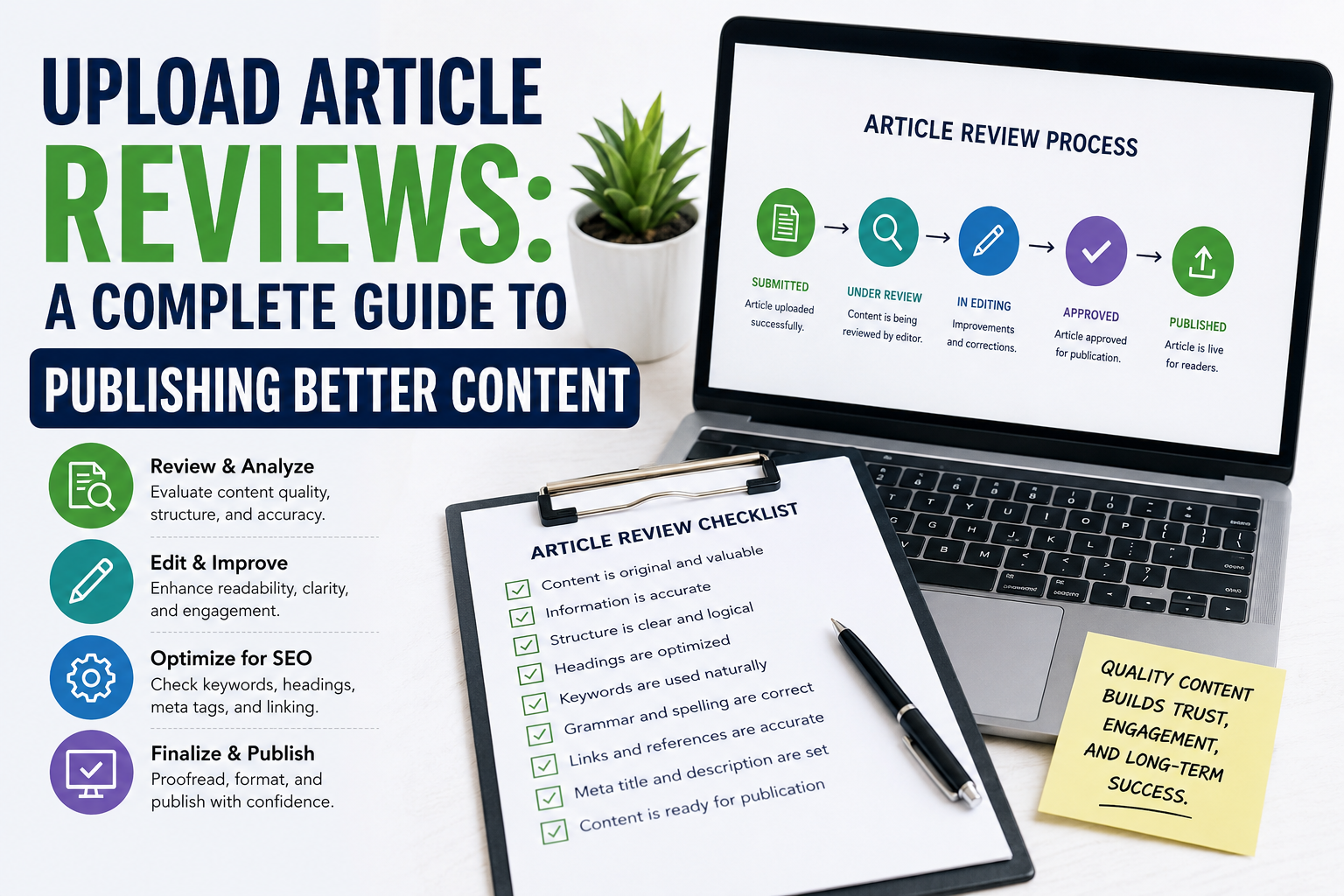
Publishing successful content requires more than writing skill. Quality comes from reviewing, refining, and aligning articles with reader expectations.
Effective upload article reviews improve clarity, strengthen SEO performance, reduce mistakes, and create better user experiences.
Writers who treat review as an essential stage rather than an optional step usually produce stronger long-term results. The extra effort before publication often determines whether content gets ignored or performs consistently.
—
FAQ Section
1. What are upload article reviews?
They are evaluation processes used to improve article quality before or after publication.
2. Why are article reviews important?
They improve readability, SEO performance, accuracy, and overall user experience.
3. How long should article review take?
The timeline depends on article length and complexity, but quality reviews should never be rushed.
4. Can article reviews improve SEO rankings?
Yes, reviewed content often performs better because it aligns more closely with search intent and content standards.
5. What should be checked before uploading an article?
Review structure, grammar, SEO, formatting, factual accuracy, and readability.
